
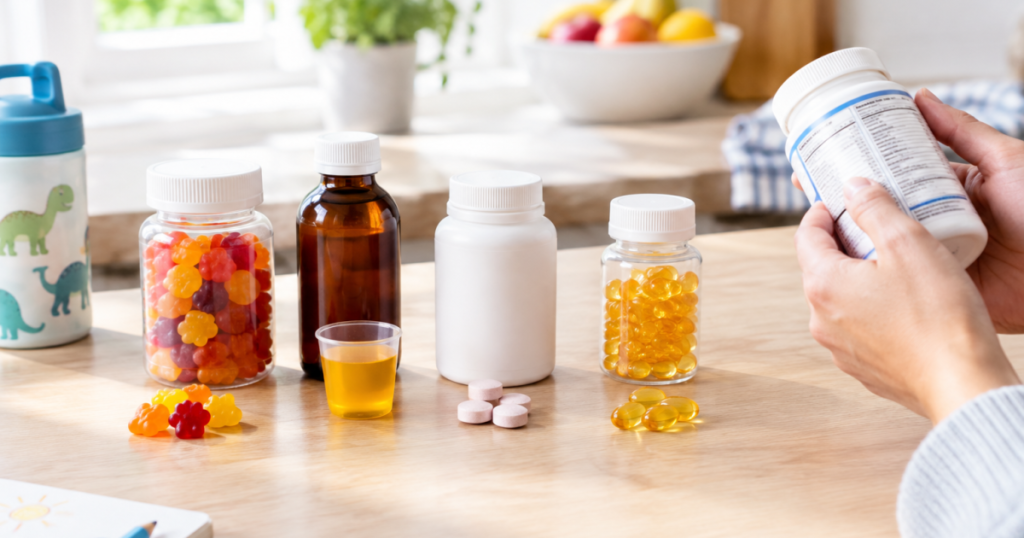
The supplement aisle can make a simple goal feel oddly complicated: fish oil, algal oil, gummies, liquids, chewables, DHA, EPA, serving sizes, and flavors that may or may not survive breakfast. Choosing the best omega-3 supplement for kids starts with a more ordinary question: what will your child actually take consistently, at the labeled serving, without turning the routine into a negotiation every morning?
Health-related decisions about starting a child on omega-3 supplements, changing labeled serving amounts, or using supplements alongside medications should be handled with a qualified pediatric clinician, following applicable medical standards and product labeling requirements.
At a glance
- Start with age fit. Only consider products whose manufacturer labeling matches your child’s age range and serving instructions.
- Compare DHA and EPA on the Supplement Facts panel. Do not rely only on front-label phrases like “omega-3 support.”
- Pick the format your child is most likely to accept. Gummies, liquids, chewables, and softgels solve different family problems.
- Match the source to your household needs. Fish oil, algal oil, and plant-based omega blends are not interchangeable on every label.
- Check storage and repeat-use friction. A refrigerated liquid, sticky gummy, or chewable softgel may be easy or annoying depending on your routine.
If you want a faster shortlist by format, source, flavor style, and age-stage fit, the Kids Omega-3 Format Finder is a useful next step once you know what you are trying to filter for.
Start with the omega-3 type, not the marketing headline
The most useful label terms are usually DHA and EPA. These are long-chain omega-3 fatty acids commonly found in fish oil and algal oil products. Many parents look for DHA first because it is the omega-3 most often highlighted on children’s supplement labels, but the right comparison is still label-to-label: how much DHA and EPA are listed per serving, and what serving size is required to get that amount?
Some children’s products also include ALA, a plant-based omega-3 found in ingredients such as flax or chia. ALA is still an omega-3, but it is not the same as preformed DHA or EPA. If your goal is specifically to compare DHA and EPA amounts, look for those names in the Supplement Facts panel rather than assuming every “omega” blend provides the same thing.
Choose the format your child will actually take

Format is not a small detail with kids. A supplement with a tidy label is not very helpful if it sits unopened, gets refused after two days, or turns into a daily standoff. The best choice is usually the product that fits both the child and the household rhythm.
Gummies
Gummies can be familiar and low-drama for children who already take gummy vitamins. They are often easier for parents who need a no-spoon, no-fridge option. The tradeoff is that gummies can vary widely in omega-3 source and DHA/EPA amounts, so the Supplement Facts panel matters. Also check the suggested age, serving count, sugar alcohols or sweeteners if those matter to your family, and whether the product needs special storage.
For families comparing fish-free gummy options, the SmartyPants Kids Omega-3 Brain review shows the kind of details worth checking: source type, labeled age range, DHA and EPA amounts, flavor style, and practical fit.
Liquids

Liquid omega-3 supplements can be flexible for younger children who are not ready for chewables or softgels. They can also work when a parent wants to mix a serving into a familiar food or drink, as long as the product label allows that use. The possible downside is taste exposure: a liquid’s flavor, aroma, and aftertaste are harder to hide than a swallowed softgel or a small gummy.
Storage is another real-world factor. Some liquid fish oil products are refrigerated after opening, and refrigeration can be easy in one household but a dealbreaker in another. Before buying, check the storage directions, bottle size, serving size, and how long the bottle is intended to last once opened.
Chewables and softgels
Chewable softgels and mini softgels can suit older kids who do not want gummies but are not ready for full-size capsules. The main questions are whether the child can safely and comfortably chew or swallow the format as directed, whether the flavor is acceptable, and whether the serving size is realistic. A child who dislikes the first chew may not be eager to repeat the experiment tomorrow.
Examples worth comparing by format include Ovega-3 Kids Chewies for families looking at algal options and Nature Made Kids First Omega-3 Gummies for families comparing mainstream gummy-style products. Treat these as label-reading examples, not automatic matches for every child.
Match the source to your family’s needs
Omega-3 source matters for diet preferences, allergens, taste expectations, and household comfort. Fish oil products are common and may list DHA, EPA, or both. Algal oil products are fish-free and can be appealing for vegetarian, vegan, or fish-avoidant households, depending on the rest of the ingredient list. Some broader omega blends include several fatty acids, but that does not automatically mean they provide the DHA or EPA amount you are trying to compare.
Check allergen statements carefully, especially if your child has a known allergy or dietary restriction. Fish, gelatin source, coconut, soy, and other ingredients may appear in children’s supplements depending on the product. The front label may be friendly and colorful; the back label is where the useful details live.
Read the serving size like a parent, not a spreadsheet
A product can look appealing until the serving instructions turn out to be awkward. Look at how many gummies, teaspoons, chewables, or softgels make one serving. Then compare that with your child’s tolerance and your household pace.
- One item per serving is often easier to remember, but it may not always provide the omega-3 amount you are comparing against another product.
- Multiple gummies or chewables may be acceptable for some kids and too much for others.
- Liquid servings can be flexible, but spoons, syringes, washing, and refrigeration can add friction.
- Shared sibling routines need extra attention because age ranges and serving directions may differ between children.
Also compare servings per container. A bottle that looks economical may run out quickly if the labeled serving is multiple pieces per day or if more than one child is using it. You do not need a complicated spreadsheet, but a quick “days per bottle” check can prevent surprise reorders.
Quality cues that are actually useful
Because dietary supplements are not evaluated like medicines for treating conditions, label quality and transparency deserve attention. Useful cues include clear DHA and EPA amounts, a complete Supplement Facts panel, specific serving directions, storage instructions, allergen statements, and a manufacturer that makes product information easy to find.
Third-party testing claims can also be relevant, but read them carefully. A symbol or phrase is more useful when the company explains what is tested, who does the testing, and whether the claim applies to that exact product. Avoid assuming that a broad brand reputation applies equally to every formula.
Common buying mistakes
- Buying by flavor alone. A flavor your child likes matters, but it should not replace checking DHA, EPA, serving size, and age labeling.
- Assuming “fish-free” means vegan. Fish-free may refer to the omega source, while other ingredients can still affect dietary fit.
- Ignoring storage instructions. A refrigerated liquid can be excellent for one routine and forgotten in the back of the fridge in another.
- Choosing the biggest bottle first. If your child rejects the format, a family-size bottle is just a larger reminder of a mismatch.
- Comparing front-label omega amounts only. Look at the actual DHA and EPA per serving, not just total oil or broad omega blend language.
Questions people ask
Are gummies, liquids, or softgels better for kids?
No format is universally better. Gummies tend to be familiar, liquids can be flexible, and softgels or chewables may suit older kids. The better option is the one that matches the child’s age, chewing or swallowing ability, taste tolerance, dietary needs, and the labeled serving instructions.
Should I choose fish oil or algal oil?
Fish oil and algal oil can both appear in children’s omega-3 products, but they fit different preferences. Fish oil is common in DHA and EPA supplements. Algal oil is fish-free and may suit families avoiding fish-derived ingredients. Always verify the full ingredient list, allergen statements, and DHA/EPA amounts.
How much DHA or EPA should a child take?
Use the product’s labeled serving directions and ask a pediatric clinician for individualized guidance, especially for children with medical conditions, medication use, allergies, or specialized diets. Avoid increasing serving amounts on your own because children’s products are formulated and labeled differently.
Practical takeaway
The best omega-3 supplement for kids is not simply the one with the loudest label or the trendiest format. It is the product that fits your child’s age, provides clearly labeled DHA and EPA information, uses a source that matches your household needs, and can be taken consistently without adding stress to the day.
Start with age and format, then check DHA/EPA amounts, source, allergens, storage, and serving count. If two products look similar on paper, choose the one with the lower-friction routine. That is often the difference between a supplement that gets used and one that quietly expires in the pantry.
Junior Omega may earn from qualifying purchases through some links; the site’s Affiliate Disclosure explains how that works while keeping editorial guidance focused on practical product fit.